AC vs DC Dryer Motors: Why the Difference Outlives the Hype
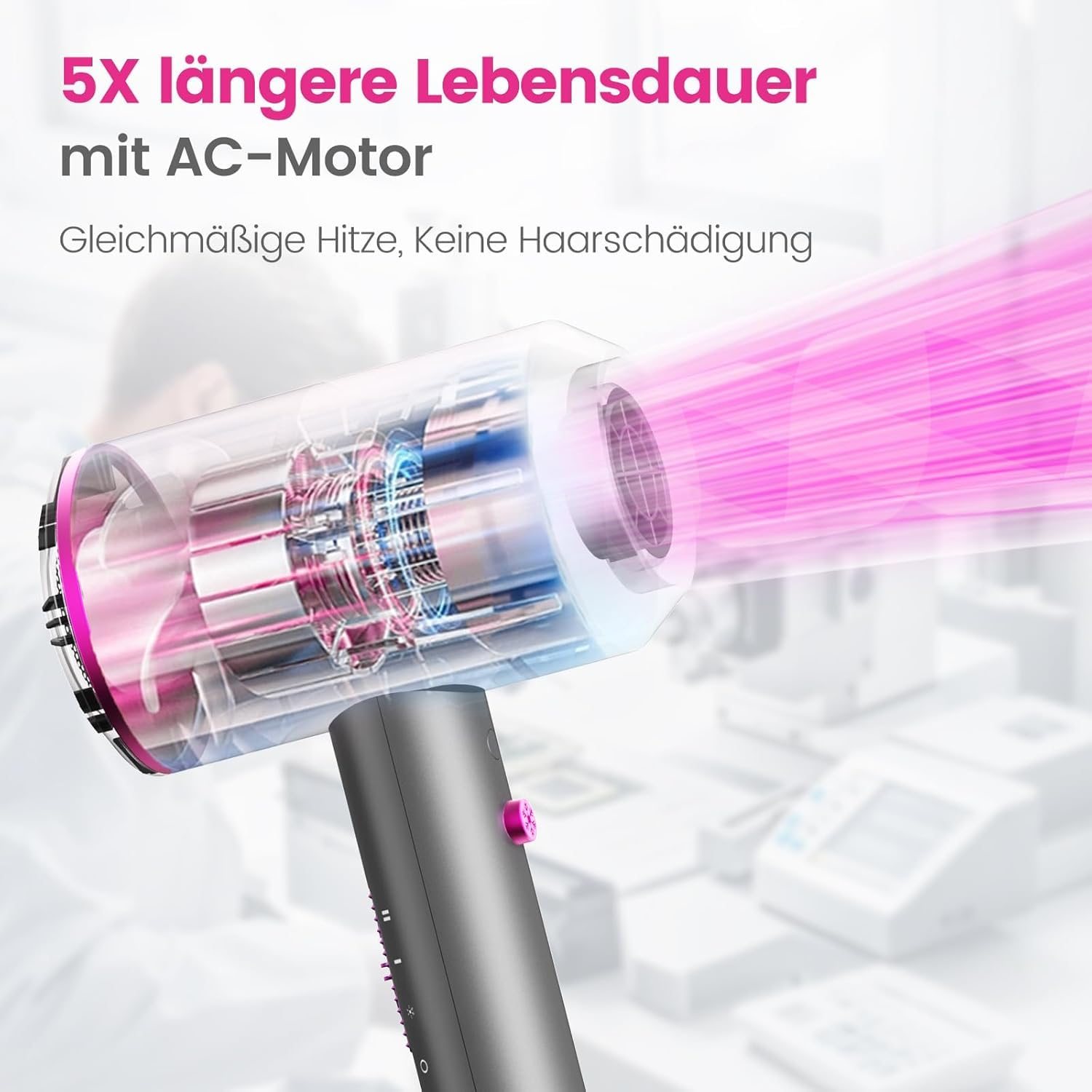
Specs sheets argue about wattage and ions, but the component that decides how a dryer feels in year two is the motor. It is also the part marketing talks about least.
What a DC motor is
Most lightweight dryers use brushed DC motors — the same family of motor as a toy or a laptop fan. They are cheap, small and light. Their weakness is the brushes: carbon contacts that physically rub a spinning commutator thousands of times a minute. The brushes and the commutator wear, power drops, and the characteristic whine gets rougher. A budget DC dryer at its best on day one is noticeably weaker by month twelve of daily use.
What an AC motor is
AC motors — the kind salons have used for decades — swap the wearing contact design for an induction-driven layout. There is no brush rubbing the armature at speed, so the power curve stays flat for years, not months. The trade is weight and cost: AC motors are heavier and pricier, which is why they appear in professional tools rather than travel gadgets.
What it means in practice
- Airflow. An AC motor moves a broader, denser stream — drying is faster at the same temperature.
- Lifespan. Roughly five times the service life of a comparable DC motor. It is the difference between replacing a dryer yearly and keeping one for five.
- Feel. Steady, deep airflow rather than a thin jet — you dry hair, you do not sandblast it.
Every dryer in the current CASAMAA line runs a professional AC motor. Yes, they weigh a little more than featherweight DC dryers — the Salon 1500 is about 700 g — and that is the honest cost of a motor that does not fade.
Want the dryer that does this quietly, every morning?
Shop the range